I created this blog so that new and experienced teachers understand the principles of UDL , identify UDL areas that are appropriate for your current/potential teaching position, critically reflect on existing UDL practices and find ways to apply UDL principles in instructional Planning.

- Wiki Site
- Multiple Means of Representation:
- Multiple Means of Representation is considered the "what" of learning. According to this principle of UDL students have different perceptions and comprehend the information differently. A student with a learning disability such as dyslexia, requires various approaches when addressing the content. Utilizing audio books, video clips, and manipulation of text and text presentation are several approaches that could assist as accommodations for this LD or others. Providing options for representations is essential to assist the student with dyslexia (all students) because of how differently they perceive and comprehend the material. This is important because of the message it brings forth that every student is their own puzzle piece and not all approaches are affective for the entire group. Instruction has to be planned around what the students are able to do and "how they get the message"
- The site below is a very informative site. It elaborates more on the methods that can be used for multiple means of representation. http://www.udlcenter.org/aboutudl/udlguidelines/principle1
- Here is another site that focuses on the instructional consultation team for UDL.
- http://teacherweb.com/IN/MtHealtyElementary/StephanieCraig/apt3.aspx
-
- Multiple Means of Action and Expression
- The "how" of learning is the means of action and expression in UDL. Defined by this principal, students vary in the ways they search a learning environment and how they express their knowledge. Those students who struggle with strategic and organizational abilities (ADHD), approach learning tasks in various ways and will demonstrate their mastery in different ways. You may have students who are able to express themselves well in oral speech but not in written text. Student's with attention, or tracking difficulties can benefit from the use of an on-screen keyboard by manipulating the keys with their mouse. This could go well in my classroom someday because students who have tracking difficulties have an assistive tool to keep them on task, thus allowing them to participate or comprehend more affectively.
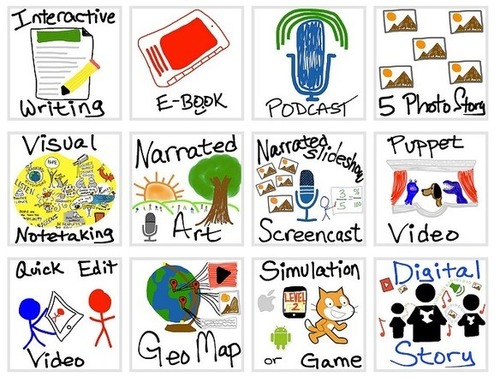
- Provided is a link to scholastic that provides 9 podcast for teachers and students. Podcasts are helpful in providing directions for to assignments, where the student would orally respond, or, reading test aloud to students where the student could possibly retell the story.
- Multiple Means of Engagement
- Means of engagement refers to the "why" of learning. UDL states that students vary prominently in the ways they can be engage or are motivated to learn. Some students are engaged spontaneously or by being exposed to new material. While others require more routines to maintain their engagement. Finding out the students interest in my classroom is one way of how I found different engagement strategies for a select few students who had behavioral issues. I feel like most teachers already have multiple ways of engaging students for various situations that may arise.
References:
National center on universal design for learning. (2013). Retrieved from http://www.udlcenter.org/aboutudl/udlguidelines/principle1

I really enjoyed looking at the Scholastic website you linked suggesting various podcasts that I could use in the classroom. All the websites mentioned on the page would be fantastic resources to use with my fourth grade students. I especially liked bookwink.com website where students can listen to 3 minute book talks. Just long enough to keep a students attention and get them hooked at the same time! I know that my students would particularly love the podcast "The Science Show for Kids". They always have burning science questions and listening to other kid's questions would really spark their interest in science.
ReplyDeleteI agree, thank you for providing the link to the Scholastic Website. It was very interesting to read how Podcasts can be used as an educational tool. I do not follow any Podcast personally. But now, I am very excited about usually Podcast in my classroom. I really appreciated the Poem and ESL podcast. I am always looking for ways to engage ESL learners and poetry podcast will help to introduce poetry to student with dyslexia and/or visual impairments.
ReplyDeleteYour suggested sites are great - I went into the scholastic site and the pod casts offer a good selection of opportunities for everyone. I especially liked the national geographic site. I love science and seeing how ANY grade level can make science part of their learning in reading etc. was inspiring! Bravo
ReplyDelete