Wednesday, June 12, 2013

UDL Toolkits: Planning for All Learners (PAL)/National Center on Universal Design for Learning

                 1. Planning for All Learners applies UDL to planning and developing curricula in ways that promote access, participation, and progress in the general education curriculum for all learners (Cast, 2002). The Planning for All Learners Toolkit  provides specifics on how to plan, guide, mentor, model lessons, and select resources.  The toolkits were said to be used during face-to-face training sessions to support follow-ups, or when training others.  Toolkits are always good to have to improve in the over instruction of the lesson.  The toolkit has multifaceted ways to affectively reach all learners.  The toolkit would be useful in my eyes as a frame of reference of how to appropriately go about instruction and for resources if I felt as though the current ones were not effective enough
http://www.cast.org/teachingeverystudent/toolkits/tk_introduction.cfm?


  National Center On Universal Design for Learning
        1.  The site is similar to the other sites in informing you about what UDL is ( the basics), the curriculum, guidelines etc.  Something different that I notice was the section for advocacy.  The advocacy link provides you articles about states pushing for UDL.  I find it useful in understanding the legal aspects behind UDL to fully understand how serious of a cause it made to be as a new teacher.  Being kept up to date with the general framework is imperative for curriculum and instruction.   http://www.udlcenter.org/aboutudl/udlguidelines

          2. CHECK IT OUT!!!! Response to the Massachusetts ESEA Flexibility Proposal


 References:
Cast. (2009). Retrieved from http://www.cast.org/udl/index.html

Teaching Every Student

  Teaching Every Student
    1. The site goes in depth of how to go about utilizing UDL in the classroom.  Teachers are provided with various materials that all aid in learning how to use UDL affectively in the classroom.  First, you are provided with links to learn more about UDL.  The links range on how to use assistive technology in the classroom to lesson plans.  I thought it was good to have activities and lesson plans available to see how I compare and contrast to the style of UDL by evaluating the lesson plan.  http://www.cast.org/teachingeverystudent/  
    2. Lesson:
      1. Provided below is a link to a UDL lesson plan.  The lesson plan gives a good explanation of how to instruct within each section.  The traditional approach is also provided. I thought it was useful to have both approaches available to understand the similarities and differences .    


"SO THAT'S HOW YOU ASSESS!"


 References:
Cast. (2009). Retrieved from http://www.cast.org/udl/index.html


CAST.org

CAST

    1. CAST is a nonprofit research and development organization that works to expand learning opportunities for all individuals through Universal Design for Learning (http://www.cast.org/udl/index.html  ).  CAST also provides learning tools, research and development,  a library and what they're about overall.  I would recommend this site to anyone who is new to UDL.  It provides good examples of the principles that allows you to comprehend the message.  The site was helpful in developing a fuller understanding of UDL.  This is also a good visual that I will most likely print out and refer back to if I ever need clarification.  
    2. Cast provided included a professional learning page is good because the educator is able to gain more knowledge to development as an instructor of UDL from experts, speakers and workshops.  Below are the links to the sections of Professional Learning.

Professional Learning


Participate in or Schedule a Workshop A stimulating learning environment where you can learn from CAST experts and one another.
Take an Online Course An ever-expanding array of facilitated online courses and short self-paced modules to educators.
Invite a Speaker Highly engaging, informative, and inspiring keynote addresses, workshop presentations, and seminars.
Learn about our Customized Solutions Designed in partnership with schools, districts, states and organizations to develop experts knowledgeable in UDL


 Universal Design for Learning
  1. Recognition Networks

    The "what" of learning
    brain image with the recognition network highlighted in pink
    How we gather facts and categorize what we see, hear, and read. Identifying letters, words, or an author's style are recognition tasks.
    pink checkmark
    Present information and content in different ways
    More ways to provide
    Multiple Means of Representation

    Strategic Networks

    The "how" of learning
    brain image with the recognition network highlighted in pink
    Planning and performing tasks. How we organize and express our ideas. Writing an essay or solving a math problem are strategic tasks.
    blue checkmark
    Differentiate the ways that students can express what they know
    More ways to provide
    Multiple Means of Action and Expression

    Affective Networks

    The "why" of learning
    brain image with the recognition network highlighted in pink
    How learners get engaged and stay motivated. How they are challenged, excited, or interested. These are affective dimensions.
    green checkmark
    Stimulate interest and motivation for learning
    More ways to provide
    Multiple Means of Engagement


References:


Wiki Site

HELLO!

I created this blog so that new and experienced teachers understand the principles of UDL , identify UDL areas that are appropriate for your current/potential teaching position, critically reflect on existing UDL practices and find ways to apply UDL principles in instructional Planning.


  1. Wiki Site
    1. Multiple Means of Representation:
      1. Multiple Means of Representation is considered the "what" of learning.  According to this principle of UDL students have different perceptions and comprehend the information differently.  A student with a learning disability such as dyslexia, requires various approaches when addressing the content. Utilizing audio books, video clips, and manipulation of text and text presentation are several approaches that could assist as accommodations for this LD or others.  Providing options for representations is essential to assist the student  with dyslexia (all students) because of how differently they perceive and comprehend the material. This is important because of the message it brings forth that every student is their own puzzle piece and not all approaches are affective for the entire group.  Instruction has to be planned around what the students are able to do and "how they get the message"  
      2.  The site below is a very informative site.  It elaborates more on the methods that can be used for multiple means of representation. http://www.udlcenter.org/aboutudl/udlguidelines/principle1
      3. Here is another site that focuses on the instructional consultation team for UDL. 
      4. http://teacherweb.com/IN/MtHealtyElementary/StephanieCraig/apt3.aspx
      5.  
    2. Multiple Means of Action and Expression 
      1. The "how" of learning is the means of action and expression in UDL.  Defined by this principal, students vary in the ways they search a learning environment and how they express their knowledge.  Those students who struggle with strategic and organizational abilities (ADHD),  approach learning tasks in various ways and will demonstrate their mastery in different ways. You may have students who are able to express themselves well in oral speech but not in written text.  Student's with attention, or tracking difficulties can benefit from the use of an on-screen keyboard by manipulating the keys with their mouse. This could go well in my classroom someday because students who have tracking difficulties have an assistive tool to keep them on task, thus allowing them to participate or comprehend more affectively.  
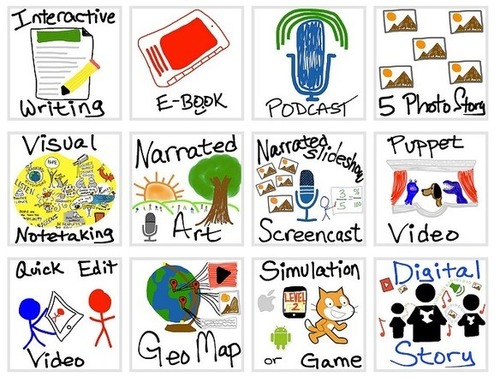
      1. Provided is a link to scholastic that provides 9 podcast for teachers and students.  Podcasts are helpful in providing directions for to assignments, where the student would orally respond, or, reading test aloud to students where the student could possibly retell the story. 
        1. http://www.scholastic.com/teachers/article/10-podcasts-teachers-and-kids


    1. Multiple Means of Engagement
      1. Means of engagement refers to the "why" of learning. UDL states that  students vary prominently in the ways they can be engage or are motivated to learn. Some students are engaged spontaneously or by being exposed to new material.  While others require more routines to maintain their engagement. Finding out the students interest in my classroom is one way of how I found different engagement strategies for a select few students who had behavioral issues.  I feel like most teachers already have multiple ways of engaging students for various situations that may arise.  


References:
National center on universal design for learning. (2013). Retrieved from http://www.udlcenter.org/aboutudl/udlguidelines/principle1